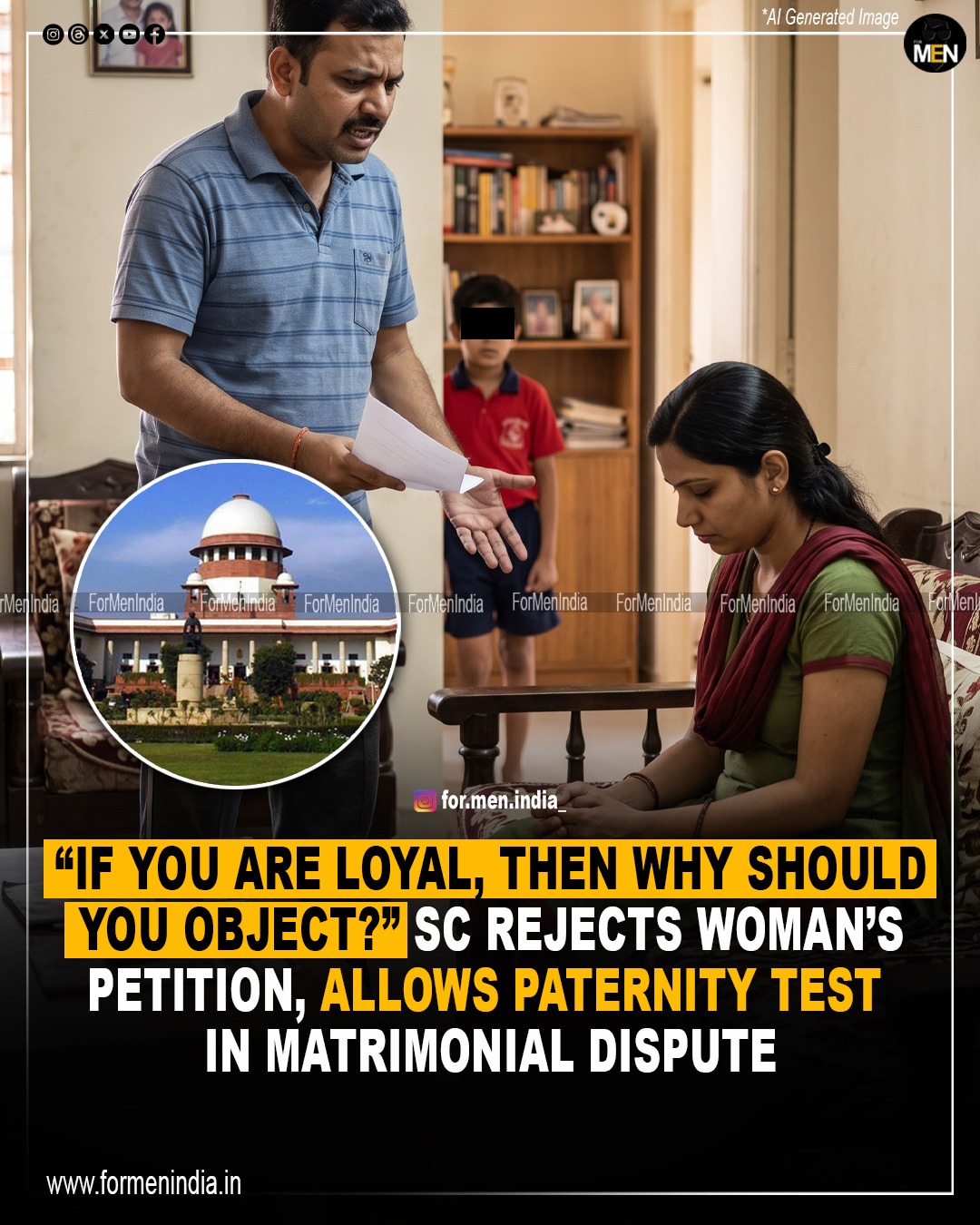
The Supreme Court on Wednesday (19th August), held that a child may be subjected to a paternity test in a matrimonial dispute if the husband seeks divorce alleging that his wife is of “unchaste character” and contends that he is not the biological father of the child.
A bench of Justices M M Sundresh and Prasanna B Varale rejected the petition of a woman, objecting to the paternity test of a child. She argued that it was a settled principle of law that no party can be forced to undergo a DNA test.
The husband had privately undergone a DNA test that reportedly showed that he was not the biological father of the child.
Based on the test result, he had filed a divorce petition, while also seeking a court-directed DNA test to prove his allegations.
“If you are loyal, then why should you object to the test,” the Bench asked, while upholding orders passed by a family court in Pune and Bombay High Court directing a DNA test in divorce proceedings initiated by the husband.
“In the facts of the present case, to prove the prima facie case, the husband has placed on record DNA test carried out by the laboratory at Hyderabad which concludes that the probability of him being the father is zero”, the Bombay HC had said.
The High Court had observed that such DNA report would be enough to conclude that the direction for undergoing a paternity test can be issued.
The Court had said that only DNA report could yield conclusive evidence to prove the allegations. “Considering the allegations made in the petition, it would be difficult to get conclusive evidence to prove such allegation, except the DNA report”.
The top Court upheld the order, paving the way for DNA test of the child.