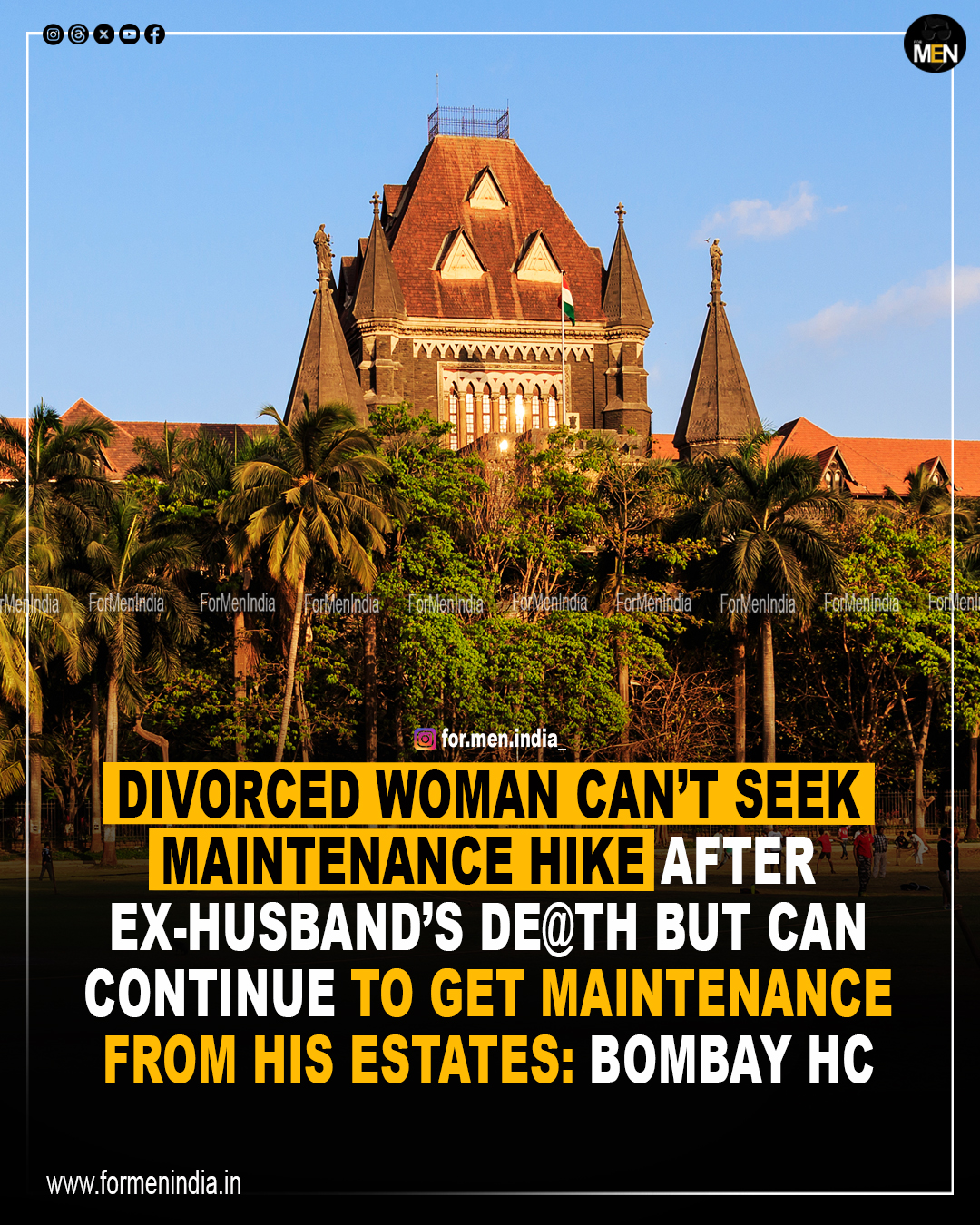
The Bombay High Court recently held that a divorced wife cannot seek enhancement of the maintenance amount that was ordered before her husband’s death.
However, the ex-wife can continue to recover her maintenance for her lifetime and also arrears of maintenance from his assets even after the husband passes, Justices Bharati Dangre and Manjusha Deshpande held.
In this case, a woman from Malabar Hill had filed an appeal in 2023 against a family court order denying enhancement of the maintenance sum after her husband died in 2012.
The high court said consequences of allowing enhancement of maintenance against a late husband would result in absurdity, uncertainty and would open the floodgates of litigation.
After analysing the Special Marriage Act, the HC said that for any enhancement or modification, cancellation of maintenance, both husband and wife must be alive.
A wife seeking enhanced maintenance is essentially seeking fresh rights requiring fresh hearing and fresh decision-making, and is not merely enforcing an existing quantified entitlement, the court explained.
HC noted that under the Hindu Adoption and Maintenance Act, 1956 (HAMA), governing marriages solemnised under the Hindu Marriage Act, 1955, the husband’s duty to maintain his wife is considered a primary legal and moral obligation and is enforceable alongside provisions under Section 25 of the Hindu Marriage Act, 1955, and Sections 18, 22 and 23 of HAMA.
Section 18 of HAMA states that a Hindu wife is entitled to be maintained by her husband during her lifetime and may claim maintenance even while living separately under certain legally recognised circumstances.
Under the Special Marriage Act, a claim for enhanced maintenance against the legal heirs of a deceased ex-husband cannot be entertained.
However, a maintenance order does not automatically extinguish on the husband’s death, and the estate or legal heirs remain liable for pending arrears, depending on the terms of the decree and whether payments had already accrued.